Introduction
In today’s fast-paced and increasingly digital world, tradesmen face unique challenges in managing their businesses. From plumbing and electrical work to carpentry and HVAC services, these skilled professionals are the backbone of our society, ensuring that our homes and workplaces function smoothly. However, the demands of running a successful trades business have never been more complex. Traditional methods of managing appointments, tracking finances, and handling customer communications are often inefficient and time-consuming, leaving tradesmen stretched thin and struggling to keep up.
Enter Quantra, an AI-first mobile business app developed by LeadTitan LLC, designed specifically to address these challenges. Quantra is not just another productivity tool; it is a revolutionary platform that leverages cutting-edge artificial intelligence to streamline operations, optimize workflows, and empower tradesmen to focus on what they do best: delivering quality service to their clients. By automating routine tasks and providing insightful analytics, Quantra is set to transform the way tradesmen operate, offering a much-needed lifeline to those who are juggling the demands of their trade and the complexities of business management.
In this blog post, we will delve deep into the landscape of tradesmen’s challenges, explore how Quantra is uniquely positioned to solve these problems, and discuss the benefits it brings to the world of trades. With an authoritative yet sympathetic lens, we aim to provide a comprehensive understanding of how this innovative app can be a game-changer for tradesmen everywhere.
The Problem
Tradesmen today are navigating an increasingly intricate business environment, where the expectation to deliver high-quality services is matched by the need for efficient business management. The traditional methods that many tradesmen rely on—such as paper-based scheduling, manual invoicing, and ad-hoc communication systems—are becoming obsolete in the face of technological advancements and growing customer expectations. These outdated systems can lead to missed appointments, delayed payments, and ultimately, lost business opportunities.
One of the primary issues facing tradesmen is time management. The daily grind often involves juggling multiple projects, coordinating with clients, and ensuring that each job is completed to satisfaction. Without a streamlined system, valuable hours are lost in administrative tasks, leaving less time for the actual work that drives revenue. This inefficiency not only affects productivity but also contributes to increased stress and burnout among tradesmen.
Moreover, financial management remains a significant hurdle. Tradesmen must keep track of expenses, generate accurate quotes, and ensure timely billing—tasks that are critical to maintaining cash flow and profitability. However, without the right tools, these processes are prone to errors and delays, impacting the financial health of the business. In an industry where margins can be tight, every dollar counts, and mismanagement can have serious repercussions.
Communication is another critical area where tradesmen often struggle. Keeping open and effective lines of communication with clients, suppliers, and team members is essential for smooth operations. Yet, many tradesmen lack a centralized system to manage these interactions, leading to misunderstandings, missed messages, and ultimately, customer dissatisfaction.
In summary, the challenges facing tradesmen are multifaceted, involving time management, financial oversight, and communication. These issues are compounded by the rapid pace of technological change and evolving customer expectations, creating an urgent need for a solution that can address these pain points. This is where Quantra comes in, offering a comprehensive and AI-driven approach to help tradesmen overcome these challenges and thrive in a competitive landscape.
“`

“`html
The Solution: The Quantra AI Worker
In today’s fast-paced and ever-evolving business landscape, the need for efficient, reliable, and intelligent solutions has never been more critical. Enter the Quantra AI Worker, a cutting-edge autonomous AI system designed to revolutionize how businesses operate. This AI-driven powerhouse delivers unparalleled accuracy and efficiency, ensuring that your organization remains competitive in a global market.
At the heart of the Quantra AI Worker is its ability to function autonomously, executing tasks with confidence scores of 85% or higher. This high level of certainty ensures that the AI makes informed decisions, minimizing the risk of errors and maximizing operational efficiency. The system’s autonomous capabilities extend beyond basic task automation; it is designed to understand, learn, and adapt to the ever-changing needs of your business.
The Quantra AI Worker’s sophisticated algorithms enable it to analyze vast amounts of data in real time, drawing insights and making decisions that would be impossible for a human worker to replicate at the same speed. By leveraging machine learning and advanced analytics, the AI Worker can identify patterns, predict outcomes, and optimize processes, giving your business a significant competitive edge.
One of the most compelling features of the Quantra AI Worker is its auto-execution capability. Once the AI has assessed a situation and determined the best course of action, it can autonomously execute tasks without the need for human intervention. This level of automation not only reduces the burden on human resources but also ensures that tasks are completed with precision and consistency. As a result, businesses can allocate human talent to more strategic and creative endeavors, driving innovation and growth.
The Quantra AI Worker’s ability to operate with confidence scores of 85% or higher is a testament to its robust decision-making framework. The system continuously refines its algorithms based on new data and feedback, ensuring that its confidence levels remain consistently high. This iterative learning process is crucial for maintaining high standards of accuracy and reliability, thereby fostering trust in the AI’s capabilities.
Moreover, the Quantra AI Worker is designed with scalability and adaptability in mind. Whether your business is a small startup or a large multinational corporation, the AI Worker can seamlessly integrate into existing systems and workflows, scaling its operations to meet your specific needs. Its modular design allows for easy customization, ensuring that the AI Worker can evolve alongside your business.
Security and data privacy are paramount in the design of the Quantra AI Worker. The system employs state-of-the-art encryption and compliance protocols to safeguard sensitive information, providing peace of mind that your data is protected at all times. Furthermore, the AI Worker’s decision-making processes are transparent and auditable, allowing businesses to maintain accountability and meet regulatory requirements.
In conclusion, the Quantra AI Worker represents a paradigm shift in how businesses approach automation and AI-driven solutions. Its autonomous capabilities, combined with high confidence scores and auto-execution, empower organizations to operate with greater efficiency, accuracy, and agility. By integrating the Quantra AI Worker into your operations, you are not only investing in cutting-edge technology but also setting the stage for long-term success and innovation in an increasingly competitive world.
“`

THE 26-SYSTEM ECOSYSTEM
The 26-System Ecosystem is a comprehensive framework designed to seamlessly integrate core business functions such as Human Resources (HR), Finance, and Operations (Ops). This integration ensures that all departments can communicate efficiently, enabling holistic decision-making that enhances organizational performance and agility. In this section, we will explore how these three pivotal components of the business interact within the 26-System Ecosystem.
HR: The People Enabler
In the 26-System Ecosystem, HR serves as the central node for talent management and organizational culture. HR systems are designed to capture and analyze a broad spectrum of employee data, from recruitment and onboarding to performance and retention. This data is invaluable not only for HR but also for Finance and Ops. By interfacing with financial systems, HR can align compensation strategies with budgetary constraints and financial forecasts. Furthermore, HR collaborates closely with Ops to anticipate workforce needs, ensuring that the right talent is available to meet operational demands.
Finance: The Fiscal Steward
Finance systems within the 26-System Ecosystem are configured to provide real-time insights into the organization’s financial health. This includes budgeting, forecasting, and financial reporting. The integration with HR systems allows Finance to better understand the cost implications of workforce management, including salaries, benefits, and training investments. Additionally, Finance collaborates with Ops to ensure that operational activities are aligned with financial goals, managing resources effectively to maximize profitability and cash flow.
Ops: The Execution Hub
Operations is the backbone of the 26-System Ecosystem, responsible for executing the organization’s strategy on a day-to-day basis. Ops systems are designed to streamline processes, optimize resource allocation, and ensure quality control. By interfacing with HR, Ops can effectively plan for and respond to human resource needs, whether it’s scaling up for peak periods or managing talent for specialized projects. Through integration with Finance, Ops can ensure that operational plans are financially viable and that expenditures are kept within budgetary limits.
Interdepartmental Communication and Collaboration
The real power of the 26-System Ecosystem lies in its ability to facilitate seamless communication and collaboration between HR, Finance, and Ops. This is achieved through a combination of integrated technology platforms, shared data repositories, and streamlined workflows.
For instance, when HR identifies a need to hire additional staff for a new project, the system automatically triggers a budget review in the Finance department. Finance can then assess the financial implications and approve the necessary budget adjustments. Simultaneously, Ops is alerted to the upcoming increase in personnel, allowing them to plan for the integration of new team members into existing workflows.
Moreover, regular cross-departmental meetings and dashboards provide transparency and keep all departments aligned with the organization’s strategic objectives. This ensures that decisions are made with a comprehensive understanding of how they impact various facets of the business, from workforce management and financial health to operational efficiency.
Conclusion: A Unified Approach
In conclusion, the 26-System Ecosystem fosters a culture of collaboration and transparency among HR, Finance, and Ops. By enabling these departments to communicate and work together effectively, organizations can optimize resource utilization, enhance employee satisfaction, and achieve their business goals more efficiently. The result is a unified approach that not only supports immediate operational needs but also paves the way for sustainable growth and success.

Section 4: Mobile Design & Conclusion
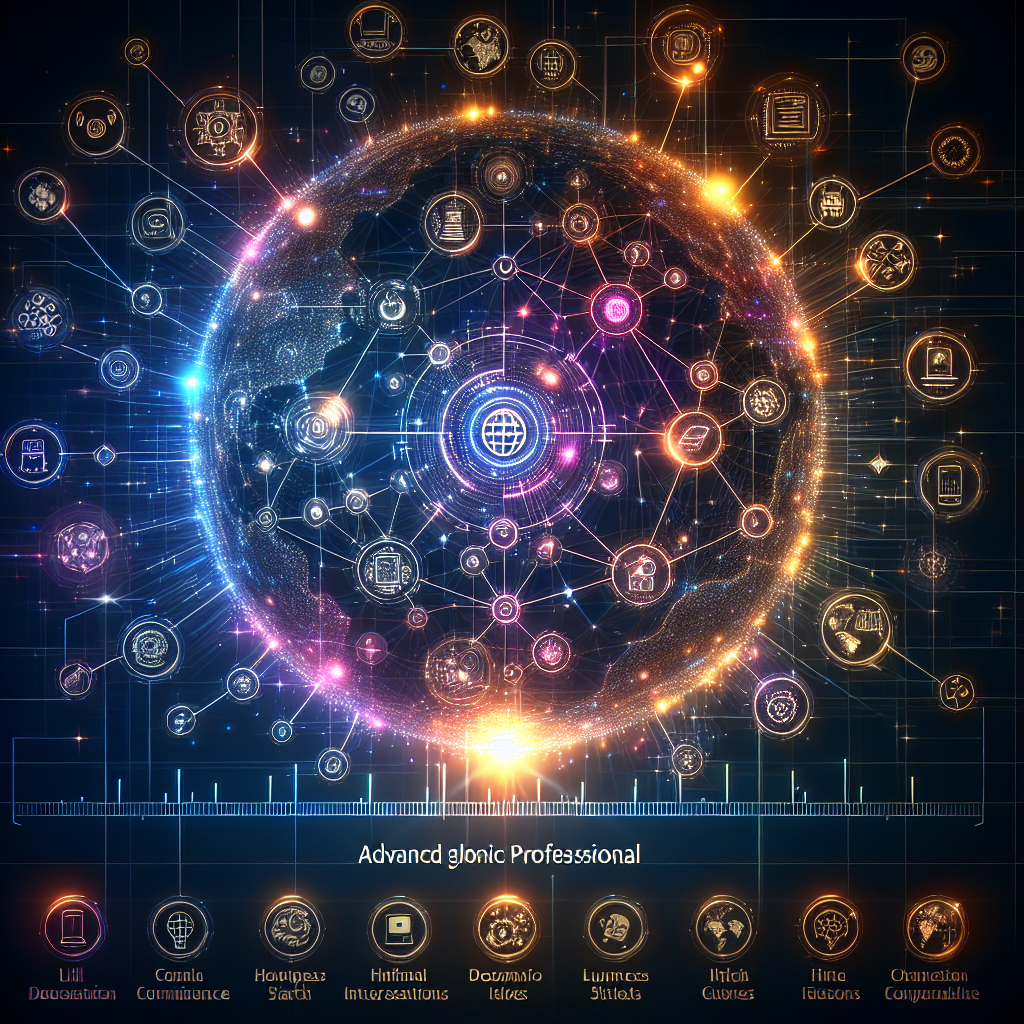
As we advance deeper into the digital age, the importance of mobile design becomes increasingly critical. The proliferation of smartphones means that a substantial percentage of users will interact with your digital content through mobile devices. This section focuses on how the ‘Cosmic Professional’ design adheres to the principles of stellar mobile design while integrating essential elements like the 30-second rule and a compelling call to action.
Cosmic Professional: A Design for the Mobile Era
The ‘Cosmic Professional’ design is a paradigm of mobile-friendly aesthetics and functionality. It is crafted with a mobile-first approach, ensuring that every element is optimized for smaller screens without compromising on user experience. The design utilizes responsive layouts, ensuring that content is dynamically adjusted to suit various screen sizes and orientations, providing a seamless experience across all devices.
Key features of the ‘Cosmic Professional’ design include a clean and intuitive interface, which reduces clutter and focuses on essential elements that enhance user interaction. The use of high-contrast color schemes and larger touch targets ensures that navigation is not only visually appealing but also accessible, catering to users with diverse needs.
The 30-Second Rule: Capturing Attention Quickly
In today’s fast-paced digital environment, capturing the user’s attention swiftly is crucial. The 30-second rule posits that a website or application should convey its core message or value proposition within the first 30 seconds of interaction. The ‘Cosmic Professional’ design excels in this regard by prioritizing content hierarchy and succinct messaging.
Upon accessing the mobile interface, users are greeted with an impactful visual that succinctly represents the brand’s essence. The strategically placed headlines and concise copy guide the user’s attention towards key offerings, ensuring that they grasp the value and purpose of the service or product without delay. This approach not only enhances user engagement but also improves conversion rates by quickly aligning user needs with the solutions offered.
A Strong Call to Action: Guiding the User Journey
An effective call to action (CTA) is vital in converting a casual visitor into a committed user or customer. The ‘Cosmic Professional’ design incorporates strong CTAs that are visually distinct and strategically positioned to facilitate seamless user journeys. These CTAs leverage action-oriented language and are coupled with motivational cues that encourage users to take the desired action, whether it’s signing up for a newsletter, making a purchase, or exploring more content.
The design ensures that CTAs are not intrusive but rather integrated naturally within the content flow. By utilizing contrast and whitespace, these elements stand out without overwhelming the user, striking a perfect balance between visibility and subtlety. The CTAs are also adaptive, changing in response to user interactions to provide contextually relevant prompts that encourage deeper engagement.
Conclusion: A Harmonious Blend of Design and Functionality
In conclusion, the ‘Cosmic Professional’ design exemplifies the best practices in mobile design by merging aesthetic appeal with functional prowess. It acknowledges the critical nature of the mobile experience and addresses it with a thoughtful approach that respects the user’s time and attention.
By adhering to the 30-second rule, it ensures that users are immediately informed and engaged, while the strong call to action guides them towards meaningful interactions. This harmonious blend of design elements not only enhances user satisfaction but also drives business outcomes, making ‘Cosmic Professional’ a benchmark for mobile design excellence.
As we continue to witness the evolution of mobile technology, embracing such comprehensive design principles will be essential for staying ahead in the competitive digital landscape. The ‘Cosmic Professional’ design serves as a reminder that effective mobile design is not just about adapting to smaller screens but about creating enriching experiences that resonate with users on a personal level.