You’re standing in a customer’s attic at 7:30 AM, checking your phone to verify the appointment details. Then you realize you need to check three different apps—one for scheduling, another for customer information, and a third to see what parts you need. By the time you finish, you’ve already lost fifteen minutes. This is the reality for most electrical contractors in 2025.
The frustration doesn’t end there. After finishing the job, you need to manually log hours in a time-tracking app, send an invoice through another platform, update your QuickBooks, and message your team about tomorrow’s appointments. Meanwhile, your office manager is drowning in paperwork, trying to keep seven different systems synchronized and up-to-date.
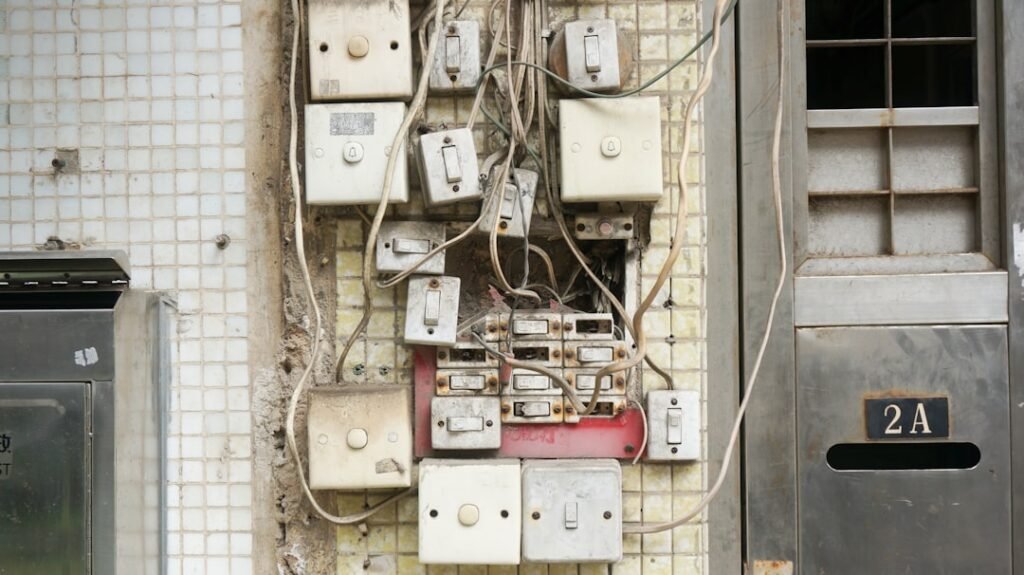
If this sounds familiar, you’re not alone. The average electrical contractor juggles between 8-10 disconnected software solutions daily, spending 40+ hours every month on administrative tasks that have nothing to do with actually serving clients or growing your business. But in 2026, there’s a better way.
The Hidden Cost of Managing Multiple Apps
The real problem with using separate software solutions isn’t just the frustration—it’s the financial and operational impact that most contractors never fully calculate.
Time Wasted on Data Entry and Switching
Consider what happens during a typical day for an electrical contractor managing multiple platforms:
- Morning planning: Check scheduling app for appointments (5 minutes)
- Customer communication: Jump to email and messaging apps to confirm details (10 minutes)
- Inventory check: Log into equipment tracking system (3 minutes)
- Job execution: Use field service app to update job status (5 minutes)
- Time tracking: Enter hours into separate time-tracking software (8 minutes)
- Expense logging: Record materials purchased in accounting software (5 minutes)
- End-of-day admin: Update multiple systems with completion notes (10 minutes)
This adds up to nearly an hour per day just switching between systems—that’s over 250 hours annually wasted on context switching alone.
Data Inconsistencies and Errors
Furthermore, managing multiple disconnected systems creates a cascading problem: information silos. When your scheduling app doesn’t talk to your invoicing system, and your invoicing system doesn’t sync with your accounting software, discrepancies emerge. A technician logs eight hours in the time-tracking app, but the job shows only six hours completed in the scheduling system. Your invoice is sent with incorrect billing information because the address wasn’t updated in all three systems simultaneously.
These errors don’t just create headaches—they damage customer relationships and drain your profit margins. Moreover, you’re essentially paying multiple subscription fees for solutions that should work together seamlessly. A typical electrical contractor might pay:
- Scheduling software: $60-150/month
- Time tracking/GPS: $40-100/month
- Invoicing/accounting: $50-200/month
- CRM/customer management: $30-150/month
- Team messaging: $10-50/month
- Document management: $20-100/month
- Payroll processing: $50-200/month
- Equipment tracking: $30-80/month
Total monthly cost: $290-1,030 across disconnected systems
The Leadership Tax
Beyond the direct costs, multiple systems create what we call the “leadership tax.” As the owner or manager, you’re constantly pulled into approvals, corrections, and troubleshooting. A crew member can’t find a document. You need to verify if a customer’s account is current. An invoice went out with the wrong amount. These small interruptions fracture your focus and prevent you from doing what actually grows your business: landing new customers, planning expansion, and leading your team effectively.
Indeed, one electrical contractor we spoke with estimated that managing multiple software systems consumed approximately 35% of his week—time that could have been spent estimating jobs, training apprentices, or identifying operational inefficiencies that were costing him thousands annually.
What Modern Electrical Contractor Software Should Do
Before evaluating specific solutions, it’s important to understand what a truly effective electrical contractor software platform should accomplish in 2026.
Real-Time Job Site Visibility
The foundation of modern electrical contractor software is complete visibility into your operations. This means knowing, at any moment:
- Where each crew member is located and what they’re working on
- Which jobs are on schedule and which are slipping
- What materials and equipment are on-site or en route
- Whether a customer is satisfied with the work being performed
Additionally, this visibility should be accessible from your phone—not just a desktop dashboard. GPS-integrated systems allow you to see your team’s real-time locations, while mobile-first platforms let you approve changes, access customer documents, or communicate with your crew from anywhere.
Seamless Scheduling and Dispatch
Efficient scheduling is critical for electrical contractors. Your software should:
- Automatically suggest optimal routes based on technician location and job complexity
- Account for travel time, appointment duration, and required skills
- Allow one-tap rescheduling when issues arise
- Sync directly with technician phones so they receive updates instantly
- Flag potential conflicts (double-booked technicians, missing certifications, etc.)
This isn’t just about convenience—poor scheduling can cost an electrical contractor thousands in lost productivity and increased fuel costs. A system that optimizes your dispatch can reduce travel time by 15-25%, directly improving your bottom line.
Unified Customer and Job Information
Rather than maintaining customer information in one system and job history in another, modern electrical contractor software should consolidate everything. When you open a customer record, you should immediately see:
- Complete service history with photos and notes
- Outstanding invoices and payment history
- Signed documents and permits
- Technician notes and recommendations
- Scheduled follow-up work
Consequently, your team can provide better customer service because they have the full context of the relationship. Technicians can spot upselling opportunities (a customer’s old wiring during a service call might indicate they need a full panel upgrade), and you can proactively reach out about preventative maintenance.
Financial Management Without Separating Apps
Furthermore, your contractor software should handle invoicing, expense tracking, and basic financial reporting without forcing you to export data to accounting software. This means:
- Automatic invoice generation based on completed work
- Mobile expense capture (photo of receipt automatically categorized)
- Real-time profit margin visibility by job or technician
- Tax-ready financial reports
- Direct integration with payroll processing
When financial data flows automatically from field operations into your accounting system, you eliminate data entry errors and gain real-time visibility into your business’s financial health.
AI-Powered Automation and Smart Decisions
In 2026, electrical contractor software should do more than organize information—it should automate decisions. This means AI capabilities that:
- Auto-schedule jobs based on technician availability and location
- Generate invoices and send them automatically upon job completion
- Flag unusual expenses or hours for review
- Recommend optimal pricing based on job complexity and materials
- Handle routine approvals without human intervention
- Learn from your preferences and improve suggestions over time
This automation is particularly powerful for routine tasks. If your AI system can confidently handle scheduling optimization, expense approval, and basic customer communication, your team can focus on high-value work like customer relationships and technical problem-solving.
Why Existing Solutions Fall Short
Electrical contractors have several options when evaluating software, but each category comes with significant limitations.
Traditional Field Service Software (ServiceTitan, Jobber)
Software like ServiceTitan and Jobber are specifically designed for field service businesses, so they understand contractor workflows. However, they typically require choosing between deep functionality for specific trades or broad functionality that’s shallow across multiple areas.
Moreover, these platforms are often desktop-first, meaning the mobile experience is an afterthought. For contractors who spend 80% of their time in the field, desktop-first software forces an uncomfortable workflow: you handle the important work on your phone, then return to your desk to catch up on administrative tasks.
Additionally, integrating these platforms with your existing financial systems (QuickBooks, Guidepoint, etc.) requires either manual data transfer or expensive custom integrations. This means you’re still maintaining multiple systems rather than truly consolidating your operations.
Generic Business Management Tools (Monday.com, Asana)
These platforms are incredibly flexible, but that flexibility comes at a cost. They lack industry-specific features that electrical contractors depend on—GPS integration, certified technician tracking, electrical-specific reporting, etc.
Consequently, you’ll spend weeks customizing a generic tool to work for your business. Even then, you’ll discover gaps where you still need specialized solutions. Most electrical contractors using these tools end up with 5-6 additional apps anyway.
Small, Specialized Solutions
There’s an abundance of niche software serving specific contractor needs—scheduling apps, time tracking, invoicing, etc. The problem with this approach is obvious: you’re back to juggling multiple platforms, synchronizing data manually, and paying separate subscription fees.
All-in-One Platforms Built for Scale
Many “all-in-one” solutions are actually designed for mid-sized to enterprise contractors with 50+ employees. For a small electrical contractor running 2-8 technicians, these platforms are overly complex and unnecessarily expensive. A solo electrician or small crew doesn’t need ServiceTitan’s features, but they also shouldn’t be limited to apps designed for companies a fraction of their complexity.
The All-in-One Mobile Solution: A Better Approach
The ideal electrical contractor software in 2026 should combine the best of all these worlds: industry-specific intelligence, true mobile-first design, and genuine system unification.
26 Connected Systems in One Platform
Rather than forcing contractors to piece together multiple solutions, a modern platform should include all necessary systems built with the same philosophy and design language. Specifically, this means:
HR and Operations Management
- Employee management with certification tracking
- GPS-enabled time clocking that prevents time padding
- Intelligent scheduling that matches technicians to jobs
- Automated payroll processing
- Time-off request management
Financial Management
- Mobile invoice generation and delivery
- Automatic expense capture via phone camera
- Real-time profit margin analysis
- Tax-ready financial reporting
- Direct deposit for technicians
Field Operations
- Real-time GPS tracking of crews and vehicles
- Equipment and inventory management
- Offline capability (critical in areas with poor reception)
- Document management (permits, service records, photos)
- Digital signatures and photo documentation
Communication and Team Management
- Team messaging (no need for separate Slack or WhatsApp)
- Automated announcements to multiple crew members
- Performance reviews and feedback
- Recognition and reward programs
- Training and certification management
AI and Automation
- Intelligent scheduling optimization
- Automatic invoice generation
- Predictive analytics (e.g., which customers are likely to churn)
- Smart approval workflows
- AI worker that handles routine tasks 24/7
The 30-Second Rule: True Simplicity
The best contractor software respects technicians’ time. Any task that should be completable in under 30 seconds with fewer than five taps shouldn’t require more. This principle should guide the entire platform design.
For instance, a technician finishing a job should be able to mark it complete, take a photo, and send an invoice in literally 30 seconds while standing at the customer’s door. The system should require no configuration, no templates to choose, no optional fields to fill—just straightforward completion.
Similarly, a manager approving an expense should see the photo, amount, and categorization with a single-tap approval. No modal windows, no confirmation dialogs, no unnecessary steps.
Confidence-Based AI Decisions
Modern electrical contractor software should also implement intelligent automation with appropriate safeguards. Specifically:
- Above 85% confidence: AI auto-executes decisions (approves routine expenses, sends standard invoices, schedules routine appointments)
- 50-84% confidence: AI suggests the action to a human for approval
- Below 50% confidence: AI escalates to a team member with full context for manual decision
This approach lets AI handle routine work while ensuring human oversight for unusual situations. Over time, as the AI learns your business patterns, it automatically handles more decisions, continuously reducing administrative burden.
The Dark Cosmic Professional Design Philosophy
Beyond functionality, the best electrical contractor software should be designed for people who work in difficult environments. The “Cosmic Professional” design approach uses depth and darkness as the foundation, adding energy through color.
This isn’t just aesthetic—it’s functional. Dark interfaces reduce eye strain when working outdoors in bright sunlight. Strategic color highlighting ensures critical information stands out. Clean, uncluttered layouts prevent mistakes during field work when you’re tired, dirty, or rushing.
Moreover, the interface should feel like a tool, not a toy. Professional contractors shouldn’t feel like they’re using consumer-grade software. The design should command respect and inspire confidence.
Making the Switch: What to Evaluate
When evaluating electrical contractor software for 2026, consider these key factors:
Mobile-First or Mobile-Friendly?
Ask the vendor directly: is this platform built for mobile as the primary experience, or is mobile an afterthought? Test the app yourself—can you complete core tasks smoothly on a phone?
True System Integration or API Connections?
Integrations through APIs are fine, but true integration means systems are designed to work together from the ground up. Can you create a job, assign a technician, track time, generate an invoice, and record payment all from one unified system? Or are you exporting data and re-importing into different systems?
AI Capabilities or Marketing Hype?
Verify what AI actually does. Can it make real decisions (approvals, scheduling, task assignment)? Or is “AI” just a buzzword for basic automation that’s existed for years?
Pricing Structure for Your Size
Be skeptical of platforms quoting per-technician pricing when you’re just starting out. For a solo electrician or small crew, you shouldn’t pay enterprise prices. Conversely, ensure the platform can grow with you without requiring a complete re-implementation.
Offline Capability
Test this critical feature. In areas with spotty reception (which is common for field work), can your crew:
- Access customer information offline?
- Mark jobs complete offline with sync when connection returns?
- Update time entries without constant internet connection?
Customer Support and Onboarding
Call their sales team with real questions. How responsive are they? Do they understand electrical contracting? Will they help you train your team?
Real-World Impact: What You Gain by Consolidating
Consolidating from 8+ apps to one unified electrical contractor platform typically delivers:
Time Savings
- Eliminate 8-12 hours monthly on data entry and app switching
- Reduce administrative work by 30-40%
- Free up owner time previously consumed by system management
Financial Improvements
- Reduce app subscription costs from $290-1,030/month to a single consolidated fee
- Improve invoicing speed (invoice sent same day instead of 3-5 days later)
- Reduce billing errors through automation (typically saves 2-3% of revenue)
- Optimize scheduling to reduce travel time and fuel costs (15-25% savings possible)
Operational Excellence
- Real-time visibility into crew location and job progress
- Faster decision-making through consolidated information
- Improved customer communication through automated updates
- Better data for business decisions (profit by technician, job type, time period)
Team Satisfaction
- Technicians spend less time on paperwork
- Clearer job assignments and expectations
- Reduced frustration from system limitations
- Better tools make jobs easier and more professional
Conclusion: Embrace Simplicity and Efficiency in 2026
The electrical contracting landscape has shifted. In 2026, successful contractors won’t be those juggling the most sophisticated tools—they’ll be those who’ve simplified their operations and eliminated friction.
The promise of consolidating your 8+ apps into one mobile-first electrical contractor platform isn’t just about convenience. It’s about reclaiming 40+ hours monthly that you can invest in growing your business. It’s about making faster, better decisions because your information isn’t scattered across disconnected systems. It’s about your team spending time on actual electrical work rather than administrative overhead.
The technology to achieve this exists today. The question is whether you’re ready to implement it.
If you’re tired of switching between apps, chasing down information, and spending weekends catching up on administrative work, it’s time to explore what true consolidation looks like. Look for a platform that treats mobile as primary, includes all 26 systems you actually need, and leverages AI to reduce routine decisions.
Your business—and your quality of life—will thank you for it.
Ready to run your electrical contracting business from your phone? Explore how an all-in-one mobile platform can replace your current 8+ apps, eliminate administrative burden, and free you to focus on what actually grows your business. Request a demo to see how consolidation could work for your specific operation.